A Comparative Analysis of the 2018 bussolah Thesis and Digital Trends Through 2025
In 2018, the bussolah research identified a structural shift already underway: the smartphone was ceasing to be merely a communication device and was becoming the primary interface through which digital life would be organized. The study also noted that this shift was particularly pronounced among younger generations, whose daily routines, media habits, and forms of social participation were increasingly mediated by mobile technologies. The intervening years have largely confirmed that assessment.
Recent evidence shows that the mobile environment has continued to expand at a global scale. GSMA reported that by the end of 2023, between 4.6 and 4.7 billion people were using mobile internet worldwide, while Ericsson projected 7.41 billion smartphone subscriptions for 2025. These figures do not mean that every person owns a smartphone, but they do indicate the scale at which mobile connectivity has become embedded in contemporary life. What appeared in 2018 as an advancing behavioral and technological trend is now more accurately understood as a durable infrastructure of digital society.
This development is especially visible among younger populations. In the United States, Pew Research found that smartphone ownership among adults reached 90% in its 2023 survey and 91% in 2025, while 95% of teens reported having access to a smartphone in 2024. These figures reinforce the central intuition of the original bussolah thesis: among younger generations, the smartphone is not peripheral to digital experience; it is the device through which that experience is primarily accessed, interpreted, and reproduced.
The original 2018 research is best understood, therefore, not as a simple prediction of rising device sales, but as an early reading of a broader social transformation. Smartphones expanded not only in number, but in function. They became the gateway to communication, entertainment, shopping, social visibility, and platform-based participation. DataReportal’s 2025 global overview, which places internet use at 5.56 billion people at the start of that year, helps contextualize the extent to which connected life has become normalized on a planetary scale. Within that broader environment, mobile access remains one of the principal entry points into the digital world.
At the same time, a more precise retrospective reading is necessary. The current market does not reflect uninterrupted expansion in every dimension. On the contrary, worldwide smartphone shipments now suggest a mature market. IDC projected approximately 1.25 billion smartphone shipments in 2025, indicating modest growth rather than the explosive escalation that characterized the earlier phase of smartphone adoption. This does not weaken the original thesis; it refines it. The historical significance of the smartphone lies less in endless sales acceleration than in the fact that it has become a stabilized and indispensable layer of everyday life.
This distinction matters because it clarifies the nature of the forecast made in 2018. The bussolah thesis was directionally correct in identifying the smartphone as the dominant medium of digital experience, particularly for younger users. It would be less accurate, however, to suggest that the earlier text forecast every subsequent market dynamic with equal precision. What later evidence confirms most strongly is the social centrality of the device, not a detailed quantitative forecast of all future shipment patterns.
Regional variation also reinforces the argument, though with nuance. Large markets such as China and India remain central to global smartphone adoption, while growth opportunities persist in parts of Africa and other emerging regions. Yet recent GSMA analysis also shows that mobile expansion is constrained by affordability, infrastructure, digital skills, and broader inequalities. Smartphone diffusion, therefore, should not be treated as a simple index of economic progress. It is better understood as part of a more complex process of digital inclusion, one that advances unevenly across countries and populations.
The broader significance of the 2018 research becomes even clearer when considered alongside changes in media behavior. Younger audiences are increasingly drawn to social-first and visual-first environments, and video continues to gain relevance as a mode of information and cultural participation. Reuters Institute has shown that video is becoming more important online, particularly for younger groups, while Ofcom has documented the growing role of short-form video platforms among younger users. In that respect, the mobile thesis of 2018 anticipated more than device adoption; it anticipated the conditions under which vertical, fast, platform-native content would become culturally central.
Seen from 2025, the main achievement of the bussolah research lies in its early recognition that the smartphone would become the organizing device of contemporary digital life, especially for Generation Z. The forecast was not flawless in every implied detail, and it benefits from sharper distinction between subscriptions, ownership, and market shipments. Even so, its central diagnosis has proven robust. The smartphone did not simply grow. It consolidated. And in doing so, it became the ground on which younger generations built their media habits, digital identities, and forms of participation in culture.Most importantly, the 2025 text narrows the scope of the original thesis. The 2018 research was not only about devices or platforms. It implicitly pointed toward a broader question: how digital systems reshape meaning, behavior, and the experience of reality. That dimension remains underdeveloped in the current version.
When reframed through cognition, perception, and attention, the original thesis becomes stronger. What was initially described as a shift in media consumption can now be understood as a reconfiguration of how individuals engage with information, construct identity, and interpret the world around them.
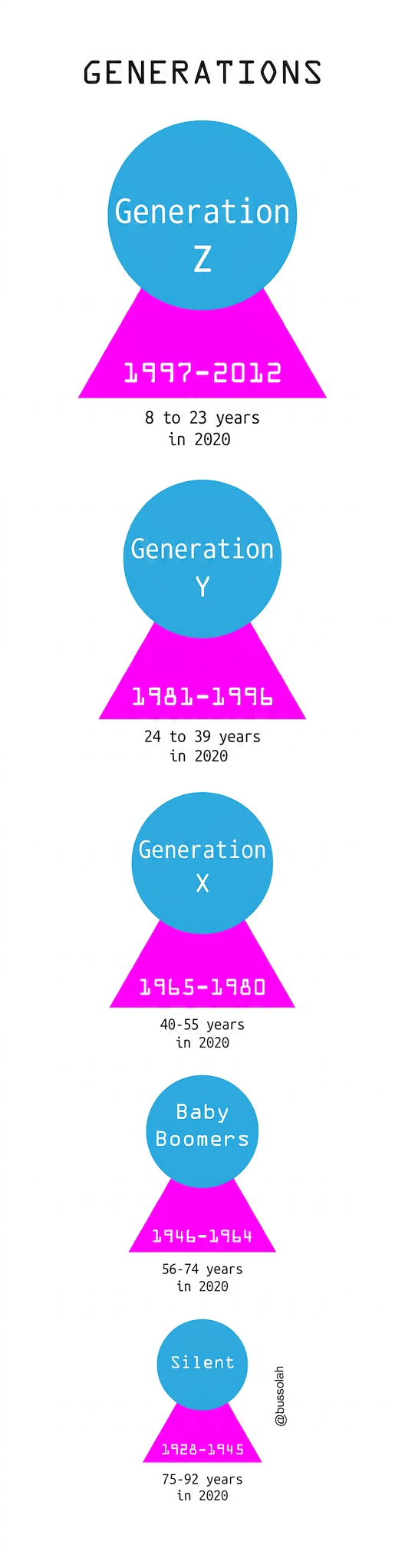
The advancement of technology in recent years has driven the rapid development of the digital landscape. The 1990s were marked by the mass adoption of personal computers, the emergence of the internet, and the introduction of new marketing concepts (KOTLER, 2010). Since then, the virtual environment has established itself as an important channel for accessing information and has influenced the development of various services. Some emerged, while others disappeared. Remember Orkut in Brazil? Apps like TikTok, Instagram, and Uber are now thriving on mobile, with young people as the main consumers and drivers of these platforms. During that same period, the Baby Boomers (1946–1964), Generation X (1965–1980), and Generation Y (1981–1996) witnessed the rise of the first “digital native” generation: Generation Z (1997–2012).
Data: Pew Research Center (2019)
These young people were born into a fully digital world, having access from an early age to the opportunities offered by the World Wide Web (WWW). The concept behind the letter “Z” comes from “zapping,” which refers to constantly switching TV channels (BORTOLAZZO, 2012). Adapted to multiple realities, they watch Netflix and listen to music on Spotify while sending messages on WhatsApp.
It can be observed that access to information may contribute to the development of a strong sense of empathy and tolerance among these young people. Their social lives are directly connected to the digital environment; they “respect differences and value diversity. Naturally, due to their ease of access to information, they have become much more tolerant than older generations” (SILVA, 2017, p. 55). They are authentic, diverse, and human, presenting a unique way of thinking, acting, and, above all, being. “These young people are also the most diverse the world has ever seen in terms of sexual and racial identity” (Exame, 2015).
To help better understand this, McKinsey & Box1824 (2017) published a study presenting some characteristics of this generation, stating that “the search for authenticity results in greater freedom of expression and a higher openness to understanding individual differences.” Born after the “Plano Real”, they were able to experience a period of optimism in Brazil. Known for its inequality, the country went through an economic boom that provided financial stability and allowed some families to reach upper-middle-class status until a few years ago. Today, in addition to a phase of discovery and first experiences, adolescents are also facing a moment of uncertainty in the country – something unprecedented for them. Social and political challenges, along with economic instability. These challenges, on the other hand, seem to foster networks of support among them and influenced by them. The majority (93%) agree that racial discrimination still exists, and many take part (59%) in both online and offline events against this type of issue. They believe (77%) that men and women are practically equal nowadays, yet less than half (47%) believe that men and women are treated equally in the workplace (Innovation Group, 2015).
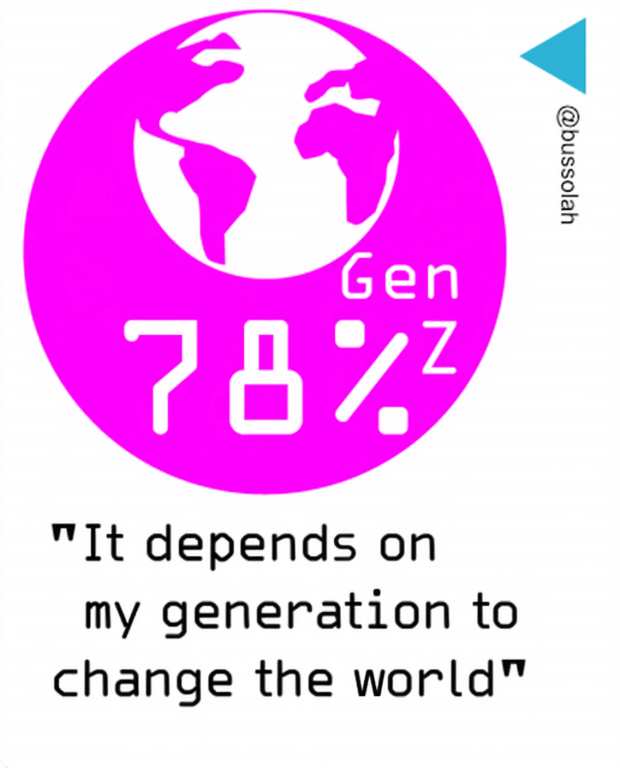
Regarding the statement “It depends on my generation to change the world,” 78% of Gen Z respondents agreed. “There is limited access for people from lower-income backgrounds to large agencies. I believe this is a problem,” says Luísa Perottino, a student at ESPM, in an interview with Meio & Mensagem – Líderes do Futuro (2019). When it comes to social justice, “53% are concerned with racial equality, 28% with feminism, 21% with LGBTQ+ rights, and 10% with transgender issues” (McCann, 2016). In terms of politics, they tend to take a position that moves away from the conventional spectrum: neither right nor left (Núcleo de Pesquisadores da Consumoteca, 2019). Gen Zers strongly believe in the effectiveness of dialogue as a way to resolve conflicts and improve the world (McKinsey, 2019).
(Data:Innovation Group 2015)
Today, the “digital natives” are already entering universities and the job market. The unique perspective this new generation holds about the world- their beliefs and values – introduces new trends and challenges for personal and family life, as well as for the fields of education and work, to the point of challenging existing traditional models.
Gen Z: Digital
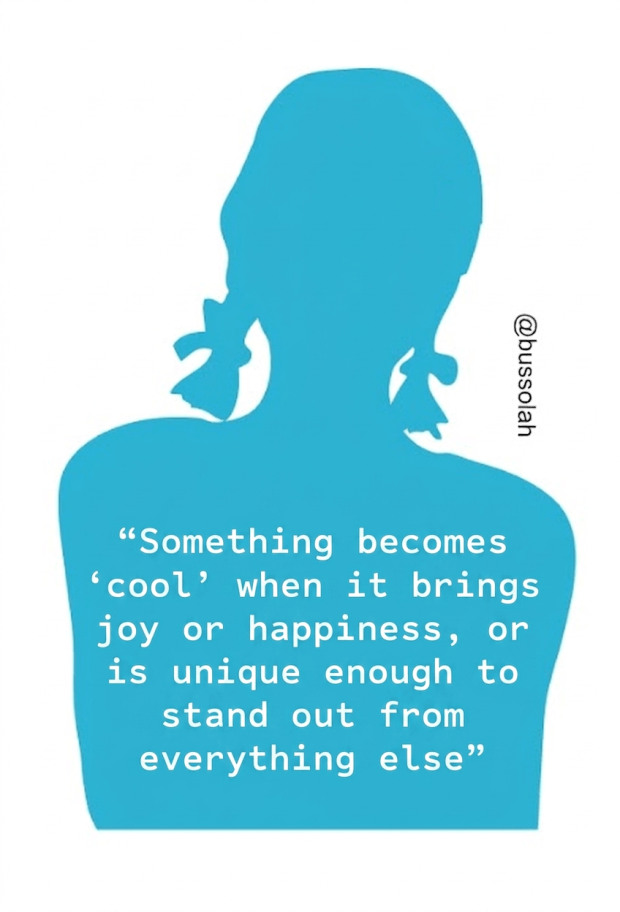
It’s Lit: A Guide to What Teens Think Is Cool, a study conducted by Google and published in 2016, offers a kind of framework for understanding “what teenagers consider cool.” “Teens feel that something is cool if it is unique, impressive, interesting, awesome, or amazing” […] “Something becomes ‘cool’ when it brings joy or happiness, or is unique enough to stand out from everything else” (It’s Lit, 2016).
(Data: It’s Lit 2016).
They believe that brands can change the world, and this idea is reflected in how they perceive and evaluate them. It’s Lit presents a top 10 ranking, in which YouTube, Netflix, and Google take the top three spots, earning the title of the coolest brands.
“I like well-known brands – mainly because they offer better customer service – but I also like brands that aren’t very popular yet. They feel more unique.” GRIFFIN, 15 (Think With Google, 2016).
In June 2019, Business Insider published a study conducted with a group of 1,884 Americans aged between 13 and 21, revealing insights into the use of digital platforms. When asked which platforms they were no longer using, 30% of respondents answered Facebook. In the same week, another report showed that 65% of Gen Z check Instagram daily, followed by YouTube (62%) and Snapchat (51%). These figures are consistent with another study conducted by Defy Media for Adweek (2017). When young people were asked, “Which platform could you not live without?”, YouTube ranked first, with a higher representation among boys in the choice of platform.
Gen Z: TikTok
TikTok is a Chinese app for creating and sharing short, spontaneous, and authentic 15-second videos, often featuring music, sounds, lip-syncing, and voiceovers. In 2016, ByteDance launched Douyin in China, where it still operates under that name. It was later introduced to the international market as TikTok, which soon after acquired Musical.ly (Wikipedia, 2019).
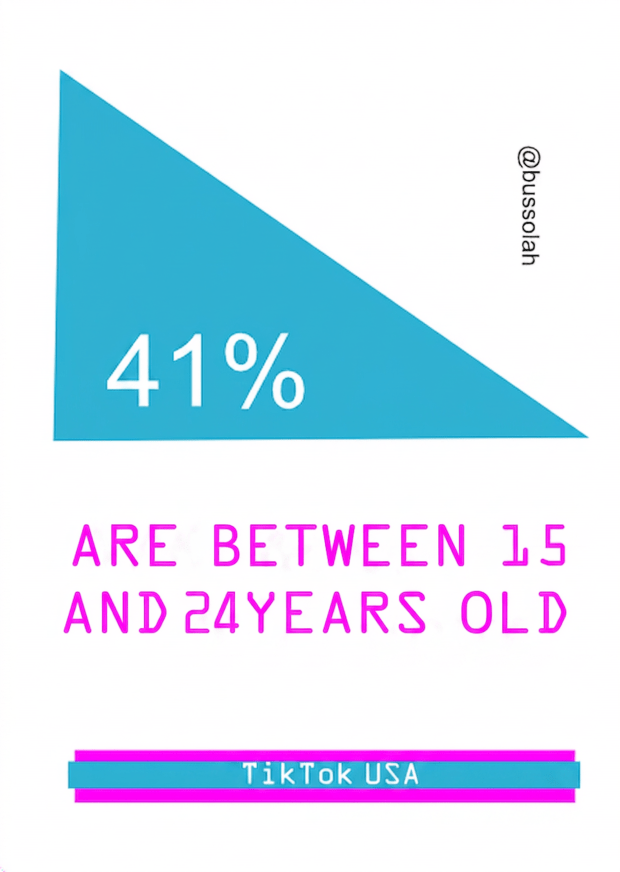
Globally, TikTok has been downloaded 2 billion times on the Apple Store and Google Play. In the first quarter of this year alone, the app reached 315 million installations (Sensor Tower, 2020). These are promising signs for Rodrigo Barbosa, TikTok’s community manager in Brazil, who aims to “create a fun, positive, and inclusive community” (interview with UOL, 2020). Around 66% of TikTok users around the world are under the age of 30 (Appa Lab, 2018). In the United States, 41% are between 15 and 24 years old (Themds, 2019). Referred to by some news sources as “Social Music,” it is the first platform to be driven by Generation Z (Themds, 2019).
(Data: Themds 2019)
Users can add customized edits directly within the app, without needing to rely on multiple external video editing tools. It is becoming increasingly common to find users teaching something or showcasing their skills. At the University of Cincinnati (2019), in the United States, a study titled “Learning and Sharing Creative Skills with Short Videos: A Case Study of User Behavior on TikTok and Bilibili” sought to understand users’ creative practices on short-form video-sharing platforms. The findings highlight the potential for new learning models based on short videos within social media platforms.
Gen Z: Consumer
In England, from the 16th to the 19th century, we can observe the origins and “birth” of consumer society. The transformation that began in the last 25 years of the 16th century expanded throughout the 17th and 18th centuries, and by the 19th century had become a permanent social factor. The surge in spending during that period can be attributed to the use of expenditure as an instrument of power by Elizabeth I, as well as to social competition among the Elizabethan nobility in pursuit of higher status. These changes led to the rise of fashion, which—among other factors—contributed to the decline of “patina”—where those who not only achieved but maintained their status across generations were distinguished from lower classes based on their material possessions. This system proved inefficient over time due to imitative behavior among lower-status consumers.
This “trickle-down” effect, pioneered in theory by George Simmel, intensified with the advent of fashion. Upper classes increasingly adopted innovations across all product categories in search of differentiation and status preservation. What was once purchased out of whim by the nobility became something bought out of necessity, and eventually, something driven by fashion – “being fashionable.” What used to be bought once in a lifetime could now be purchased repeatedly. With fashion, individuals of higher status could find more prestige in new objects than in old ones. The nobility began consuming according to new social purposes, values, tastes, and preferences. Both upper and lower classes developed increasingly diverse consumption desires. The structure of social values and the construction of individual identity were impacted by these changes. “Marketing professionals” incorporated the dynamics of fashion and worked to regulate its intensity. New techniques were developed to create new styles, aiming to meet the demands of consumer society. As new styles emerged, older ones quickly fell into discredit. This marked the birth of the fashion system that continues to shape consumption patterns to this day. These insights are drawn from the book Culture and Consumption, by McCracken.
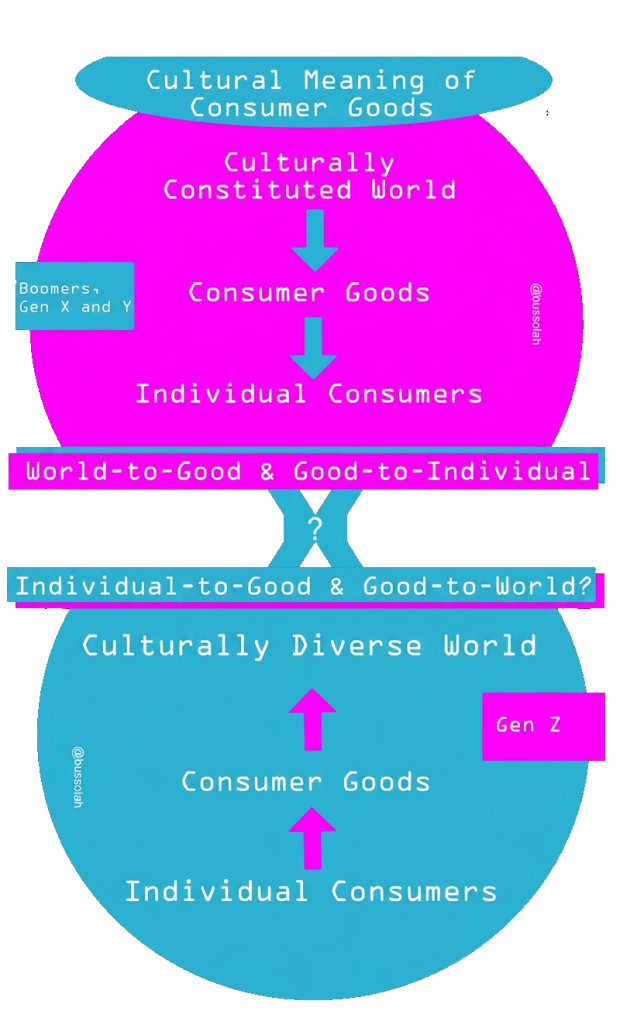
This book helps us understand how we became a consumer society, how we can think about products and services in order to better understand their symbolic properties, the different ways we use the meaning potential of goods, and how consumption allows for the construction of a system of classification of things – and people – in social life. McCracken argues that consumer goods can carry cultural meaning, that this meaning is constantly in motion, and that there is a traditional trajectory in how it moves. Typically, meaning is transferred from the culturally constituted world to consumer goods, and then to individual consumers – a “world-to-goods and goods-to-individual” relationship.
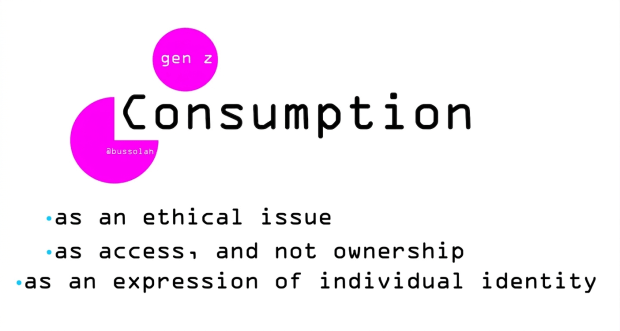
The historical context in which a generation emerges can influence how it engages with consumption. The consumption behavior of Baby Boomers, in the post–World War II period, is best represented by ideological expression. Generation X is marked by the pursuit of status, while Generation Y is driven by the search for experiences. For Generation Z, the main driver of consumption is the search for truth, both personal and collective (McKinsey, 2018). Consumption becomes a manifestation of individual identity and a means of self-expression. This is a generation that moves away from the traditional logic of consuming to fit into group norms. They seek to understand the origin of products, how they are made, and how these aspects reflect their worldview and individuality.
For Generation Z, there must be alignment between what marketing campaigns communicate and what is actually practiced. Young people seek to purchase products from companies they consider ethical (70%), refuse to buy goods from companies involved in scandals (80%), try to learn the origin of everything they purchase – where it is made, what it is made of, and how it is produced (65%) – and consider recommendations from friends as the most reliable source for learning about products and brands (63%) (McCrindle, 2019). In this sense, they establish a more pragmatic and analytical relationship with institutions and introduce a new meaning for consumption.
(Data: MCKinsey 2019)
For previous generations, television and radio were, for many years, the main sources of news. For Generation Z, these sources have multiplied with the emergence of the internet, making generational shifts more significant and accelerating technological trends. Technology has provided a high level of connectivity among individuals and with the world, creating a “hyper-cognitive generation that is very comfortable collecting and cross-referencing many sources of information, and integrating virtual and offline experiences” (McKinsey, 2019).
Analyzing McCracken’s ideas on the cultural meaning of goods, and considering Generation Z’s expectations for the future, it is possible to observe a new movement toward a different logic of consumption.
(Data: McCracken)
With consumption directly linked to the expression of individuality, personalization and gender issues gain prominence. 58% of upper-class consumers and 43% of middle-class consumers are willing to pay more for personalized offerings. Additionally, 48% of Gen Z respondents said they value brands that do not classify products as masculine or feminine (McKinsey, 2019).
REFERENCES
KOTLER, P. – Marketing 3.0. Rio de Janeiro: Elsevier, 2010.
MCCRACKEN, G. – Cultura e Consumo. Mauad, 1ª edição, 2010.
In recent decades, digital advancement has brought significant changes and influenced the habits and customs of people around the world. It is estimated that by 2022 there would be 12 billion devices connected to the internet globally. Around 54% of mobile traffic originates mainly from smartphones (Cisco, 2019).
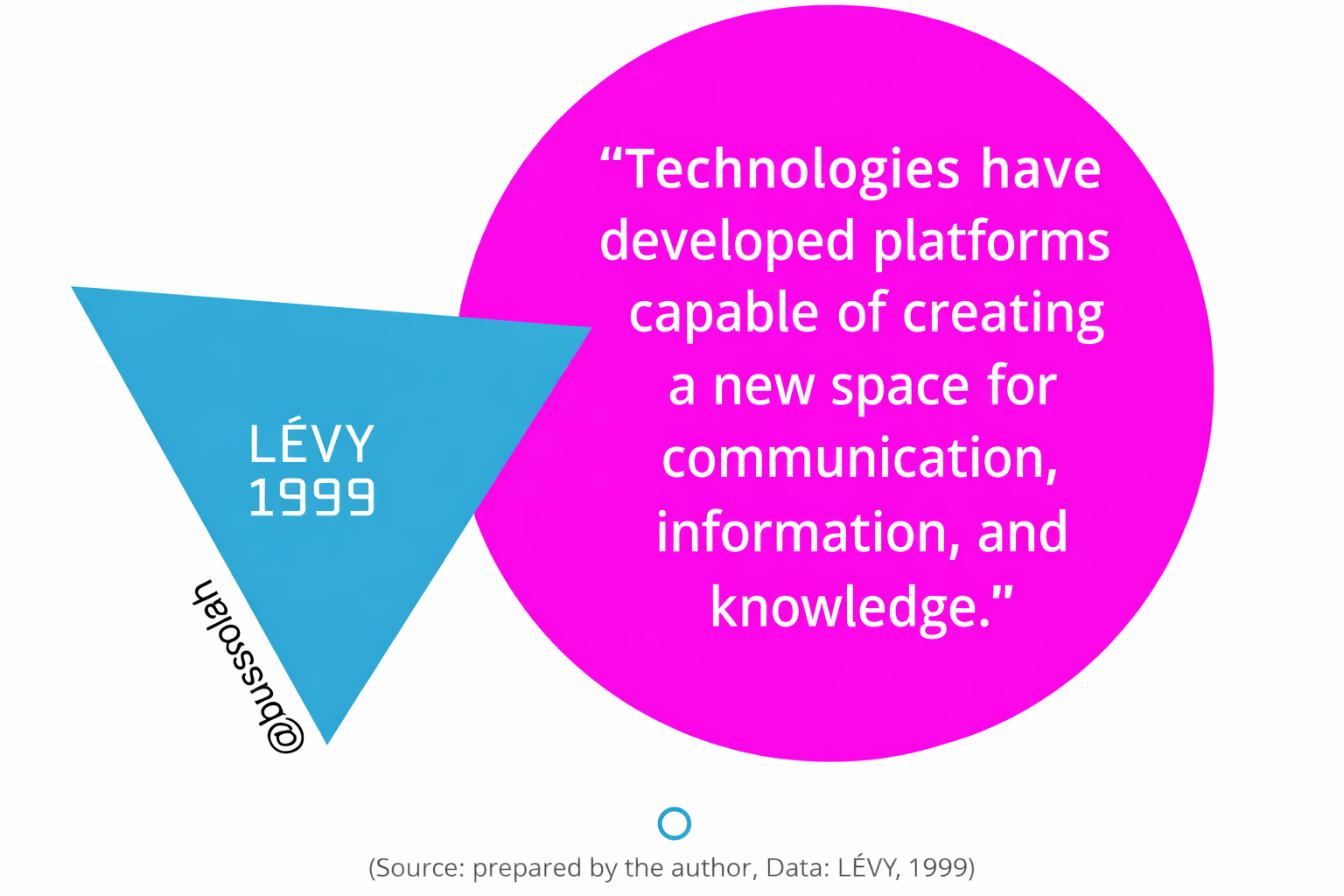
Technology has helped develop platforms capable of amplifying sources of information and communication. “Digital platforms are a business model that enables and encourages interaction between two parties or multiple groups of users, generally creating a collective body and solving common problems” (Marcio Morais, 2019). In the digital environment, technologies have created platforms that generate a new space for communication, information, and knowledge (LÉVY, 1999).
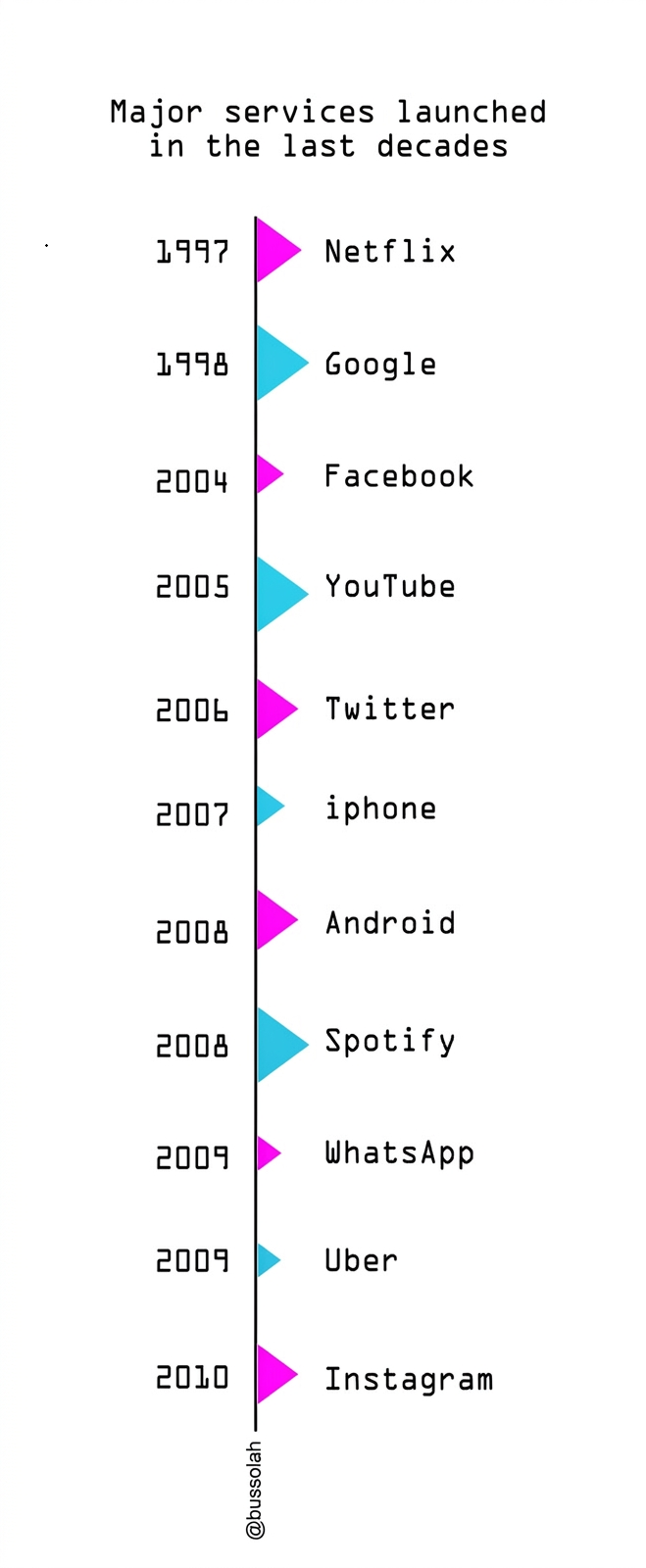
A linha do tempo abaixo indica a chegada, no mundo, dos principais serviços da última década (Runrun.it, 2017).
(Data: Runrun.it, 2017)
In Brazil, in less than ten years, some of these platforms have consolidated themselves exclusively on mobile devices, such as WhatsApp, Facebook, and Instagram. They are among the most popular apps on Brazilian smartphone home screens, representing 59%, 47%, and 37% respectively, according to Mobile Time (2019).
Brazil is the fifth country in number of internet users, with 126 million (TIC Domicílio ONU, 2019), and the second in terms of time spent online (219 minutes/day – Global Web Index, 2019). Thirty-eight percent of Brazilian smartphone users report subscribing to streaming services for movies and/or series, with access predominantly via mobile devices (Mobile Time and Opinion Box, 2019). Netflix and Spotify are the leaders. The same study shows that in just two years, the number of Brazilian internet users making in-app purchases increased from 46% to 58%.
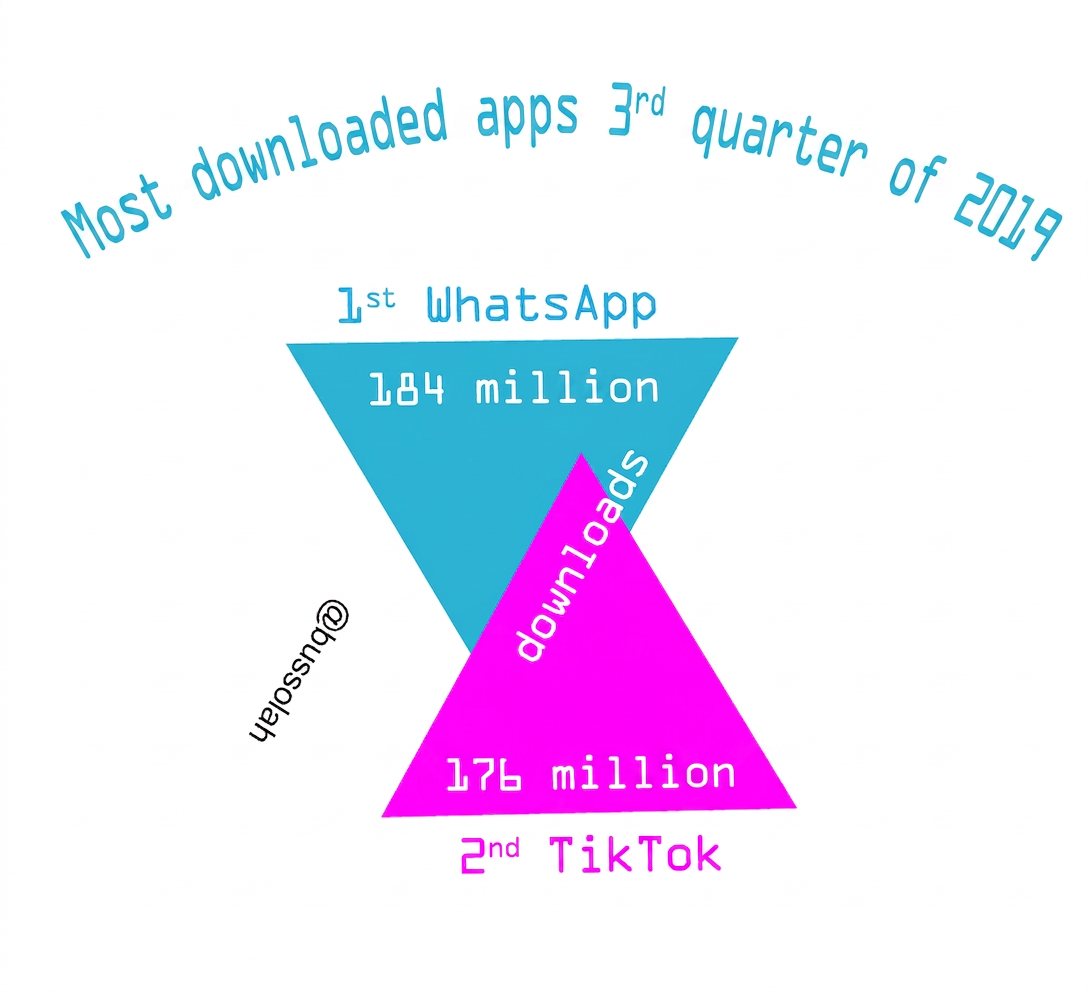
No terceiro trimestre de 2019, o WhatsApp foi o aplicativo mais baixado, com 184 milhões de instalações. “O WhatsApp é o aplicativo número mais baixado a cada trimestre, desde o terceiro trimestre de 2016, quando o Pokémon GO ficou em primeiro lugar. O segundo aplicativo mais baixado foi o TikTok, com mais de 176 milhões de novas instalações”. Em download, os Brasil é o terceiro maior (+ de 2 bilhões), ficando em primeiro lugar a Índia (+ de 5 bilhões), seguido dos E.U.A (+ de 3 bilhões). Esses dados, foram retirados do relatório segundo a Sensor Tower (2019), gigante em inteligência de mercado e insights para a economia global de aplicativos.
(Data: Sensor Tower, 2019)
Globally, Instagram saw an increase in usage time (+6%), YouTube grew by +5%, while Facebook declined by -1%. Podcasts reached 70 million listeners, and interactive gaming reached 2.5 billion players (Internet Trends, 2019). Delivery services have grown alongside the consumption of educational content via the internet. In about two years, Mercado Livre reached 389 million online payment transactions, and Rappi reached 8 million orders. Coursera and Udemy also stood out (Internet Trends, 2019).
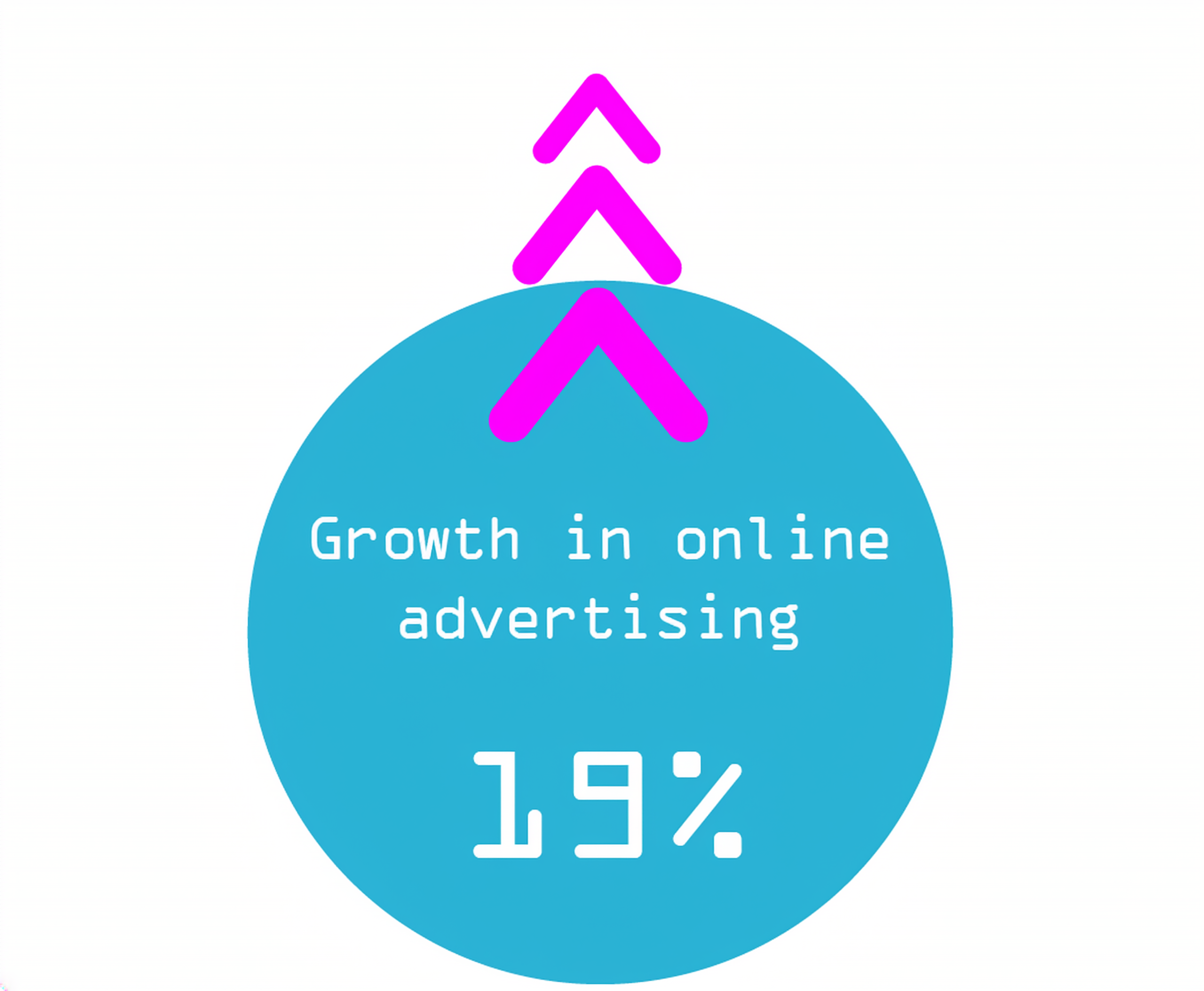
(Data: IAB Brasil, 2019)
With improved business results driven by interactivity, analysis, measurement, and strategic actions—combined with technological development—Digital Marketing has become one of the most prominent fields globally. Smartphones are becoming the main device for almost every aspect of life, especially among younger generations. Desktop-based impressions and clicks are declining in most markets.
According to the annual IAB Brazil report (Interactive Advertising Bureau, 2019), mobile (67%) accounts for a larger share of digital investment compared to desktop and tablets combined (33%). Social media and video lead as the fastest-growing digital formats, increasing by +25% and +23%, respectively (Magna Global, 2019).
The estimated growth for online advertising investment in 2019 was +30% (Interactive Advertising Bureau, 2019). In the United States alone, there was a 19.8% increase in 2018, reaching $31.4 billion. By 2020, digital and mobile advertising sales were expected to grow by +11%, followed by digital video advertising at +22% (Magna Global, 2019).
Emerging platforms have begun to play a central role in personalizing user experiences, increasing levels of engagement and retention in digital environments. According to Gartner (2019), data-driven technologies and machine learning already directly influence real-time consumer decisions, enabling more accurate and targeted recommendations. In this context, companies that adopt data-oriented strategies tend to achieve better results in digital campaigns, as they are able to gain deeper insights into user behavior. Furthermore, the growing integration between platforms—such as social media, e-commerce, and streaming services—reinforces the creation of interconnected digital ecosystems, where users move seamlessly across different services. According to Accenture (2019), 91% of consumers are more likely to purchase from brands that offer relevant and personalized experiences, highlighting the importance of companies adapting to this evolving digital landscape.
Over the past three decades, digital technologies have not simply evolved — they have reorganized the conditions under which people perceive, relate, and make decisions. What began as a network for information exchange has become an environment where life is increasingly mediated.
Generation Z is the first cohort to grow up entirely within this environment. Their relationship with technology is not one of adaptation, but of formation. As a result, the way they consume content, construct identity, and relate to the world reflects the structure of the systems they inhabit.
Three movements help explain this transformation: the consolidation of the smartphone as the primary interface of daily life, the emergence of video as a dominant form of expression, and the growing importance of purpose as a guiding principle in individual behavior.
These are not isolated trends. They are connected shifts that reveal how digital systems are reshaping human experience.
The smartphone is often described as a device. In practice, it functions as infrastructure.
It concentrates communication, memory, entertainment, and decision-making into a single, always-accessible point. It is not simply used; it is lived through. Messages, images, transactions, and interactions pass through it continuously, creating a layer between the individual and the world.
This changes the nature of attention. Instead of being directed outward in stable contexts, attention becomes fragmented, responsive, and constantly negotiated. The individual is no longer only observing reality but switching between multiple streams of input, each competing for relevance.
For younger generations, this condition is not perceived as disruption. It is the baseline. The smartphone does not interrupt experience – it organizes it.
Video has become the dominant format not only because of technological improvements, but because it aligns with how attention now operates. It delivers meaning quickly, compresses context, and combines visual and emotional cues in a way that reduces the effort required to interpret.
More importantly, video is not just a format — it is a language shaped by the environment in which it circulates. Short duration, vertical framing, and continuous flow are not arbitrary choices. They reflect the physical interaction with the device and the behavioral patterns it encourages. Content is designed for the hand, for the scroll, for the brief moment of focus before the next interruption. In this sense, video does not simply communicate within the digital system. It is a product of it.
These shifts introduce a deeper transformation: the reconfiguration of attention itself. Attention is no longer scarce because information is limited. It is scarce because information is abundant and structured to compete.
Platforms are designed to capture and retain attention, shaping not only what individuals see, but how long they remain engaged and what they return to. This creates a feedback loop in which behavior is continuously influenced by the system’s architecture.
Over time, this affects perception. What is considered relevant, interesting, or meaningful becomes partially defined by what is most visible and most frequently encountered.
For a generation raised within these dynamics, attention is not something that is simply given. It is something that is constantly negotiated within systems that are actively designed to guide it.
In this context, identity also undergoes transformation. The digital environment allows individuals to express, test, and adjust different versions of themselves in real time. Visibility becomes part of identity formation. What is shared, how it is presented, and how it is received all contribute to the construction of self.
This does not necessarily mean that identity becomes less authentic. Rather, it becomes more fluid and more exposed to feedback. The individual is both the subject and the curator of their own narrative.
For Generation Z, this process is continuous. The boundaries between private and public, internal and external, become less defined. Identity is shaped not only by internal reflection, but by interaction within networks.
Amid this constant flow of information, visibility, and interaction, a counter-movement becomes visible: the search for coherence. Purpose, in this sense, is not an abstract ideal. It is a response to fragmentation. It represents an attempt to align actions, choices, and identity within an environment that often pulls in multiple directions at once.
The increased interest in topics such as self-knowledge, mental well-being, and meaning can be understood within this context. As external stimuli multiply, the need for internal reference points becomes more evident.
This movement also extends to consumption. Products and brands are no longer evaluated only by what they offer functionally, but by what they represent. Alignment with values, narratives, and broader meanings becomes part of the decision-making process. Purpose, therefore, is not separate from the digital system. It emerges within it, as individuals attempt to navigate its complexity.
Taken together, these transformations suggest that the current digital environment is not only changing behavior, but redefining the relationship between individuals and systems.
The smartphone organizes access. Video shapes expression. Platforms influence attention. Networks mediate identity. And within all of this, individuals seek coherence.
For those working in communication, media, or branding, the challenge is not simply to adapt to new formats or platforms. It is to understand the conditions under which meaning is now constructed.
Relevance is no longer achieved through visibility alone. It depends on resonance – on the ability to connect with individuals who are simultaneously navigating information, identity, and purpose.
The transformation observed in recent years is not the result of a single technology or trend, but of a convergence of systems that now structure daily life.
Generation Z did not enter this environment; it was formed by it. Their behaviors reflect its logic, but also its tensions. The same systems that expand access and expression also fragment attention and multiply choices.
Within this dynamic, the search for meaning becomes more visible, not less. Understanding this generation, therefore, requires more than observing what they consume. It requires understanding the environment that shapes how they see, think, and define themselves within the world.