
The advancement of technology in recent years has driven the rapid development of the digital landscape. The 1990s were marked by the mass adoption of personal computers, the emergence of the internet, and the introduction of new marketing concepts (KOTLER, 2010). Since then, the virtual environment has established itself as an important channel for accessing information and has influenced the development of various services. Some emerged, while others disappeared. Remember Orkut in Brazil? Apps like TikTok, Instagram, and Uber are now thriving on mobile, with young people as the main consumers and drivers of these platforms. During that same period, the Baby Boomers (1946–1964), Generation X (1965–1980), and Generation Y (1981–1996) witnessed the rise of the first “digital native” generation: Generation Z (1997–2012).
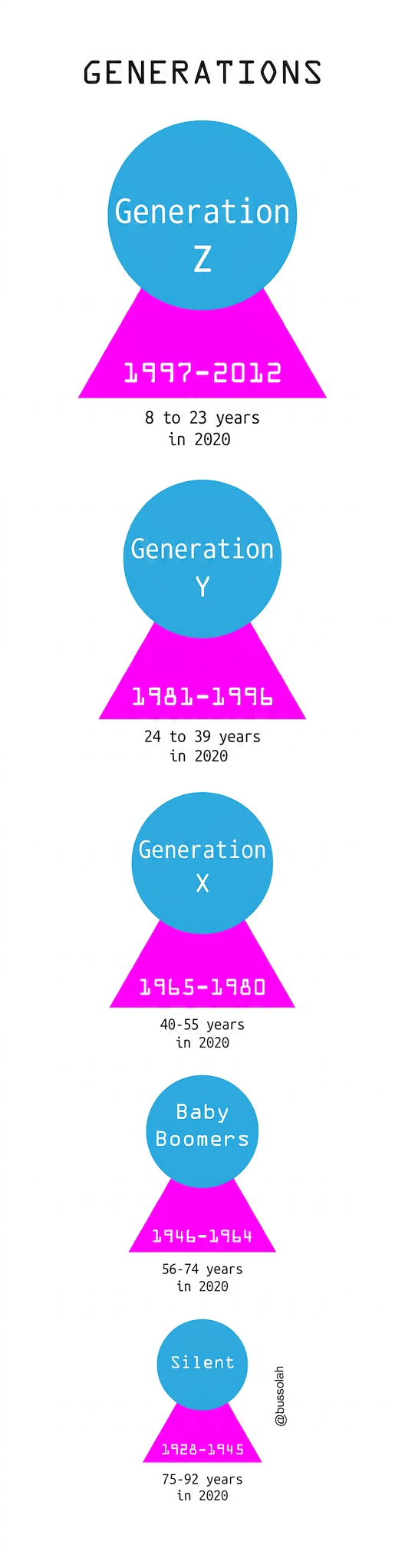
These young people were born into a fully digital world, having access from an early age to the opportunities offered by the World Wide Web (WWW). The concept behind the letter “Z” comes from “zapping,” which refers to constantly switching TV channels (BORTOLAZZO, 2012). Adapted to multiple realities, they watch Netflix and listen to music on Spotify while sending messages on WhatsApp.
It can be observed that access to information may contribute to the development of a strong sense of empathy and tolerance among these young people. Their social lives are directly connected to the digital environment; they “respect differences and value diversity. Naturally, due to their ease of access to information, they have become much more tolerant than older generations” (SILVA, 2017, p. 55). They are authentic, diverse, and human, presenting a unique way of thinking, acting, and, above all, being. “These young people are also the most diverse the world has ever seen in terms of sexual and racial identity” (Exame, 2015).
To help better understand this, McKinsey & Box1824 (2017) published a study presenting some characteristics of this generation, stating that “the search for authenticity results in greater freedom of expression and a higher openness to understanding individual differences.” Born after the “Plano Real”, they were able to experience a period of optimism in Brazil. Known for its inequality, the country went through an economic boom that provided financial stability and allowed some families to reach upper-middle-class status until a few years ago. Today, in addition to a phase of discovery and first experiences, adolescents are also facing a moment of uncertainty in the country – something unprecedented for them. Social and political challenges, along with economic instability. These challenges, on the other hand, seem to foster networks of support among them and influenced by them. The majority (93%) agree that racial discrimination still exists, and many take part (59%) in both online and offline events against this type of issue. They believe (77%) that men and women are practically equal nowadays, yet less than half (47%) believe that men and women are treated equally in the workplace (Innovation Group, 2015).
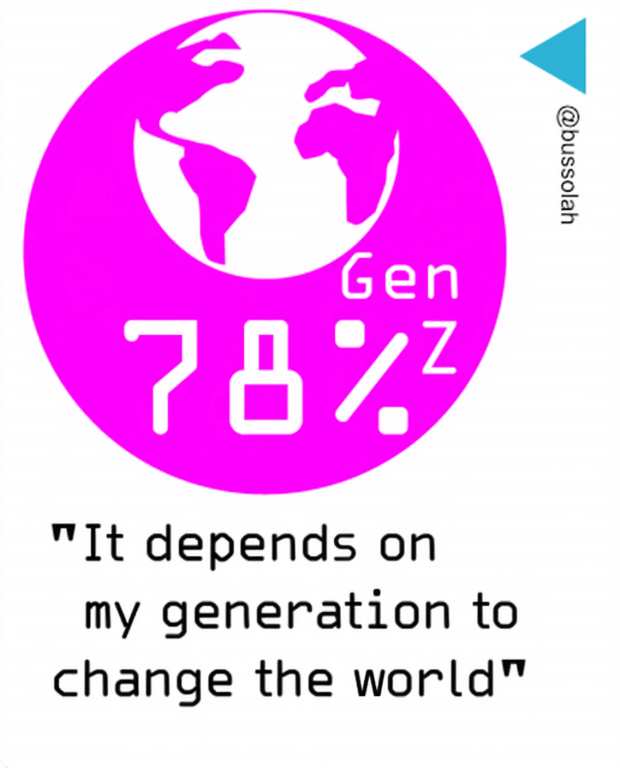
Regarding the statement “It depends on my generation to change the world,” 78% of Gen Z respondents agreed. “There is limited access for people from lower-income backgrounds to large agencies. I believe this is a problem,” says Luísa Perottino, a student at ESPM, in an interview with Meio & Mensagem – Líderes do Futuro (2019). When it comes to social justice, “53% are concerned with racial equality, 28% with feminism, 21% with LGBTQ+ rights, and 10% with transgender issues” (McCann, 2016). In terms of politics, they tend to take a position that moves away from the conventional spectrum: neither right nor left (Núcleo de Pesquisadores da Consumoteca, 2019). Gen Zers strongly believe in the effectiveness of dialogue as a way to resolve conflicts and improve the world (McKinsey, 2019).
Today, the “digital natives” are already entering universities and the job market. The unique perspective this new generation holds about the world- their beliefs and values – introduces new trends and challenges for personal and family life, as well as for the fields of education and work, to the point of challenging existing traditional models.
Gen Z: Digital
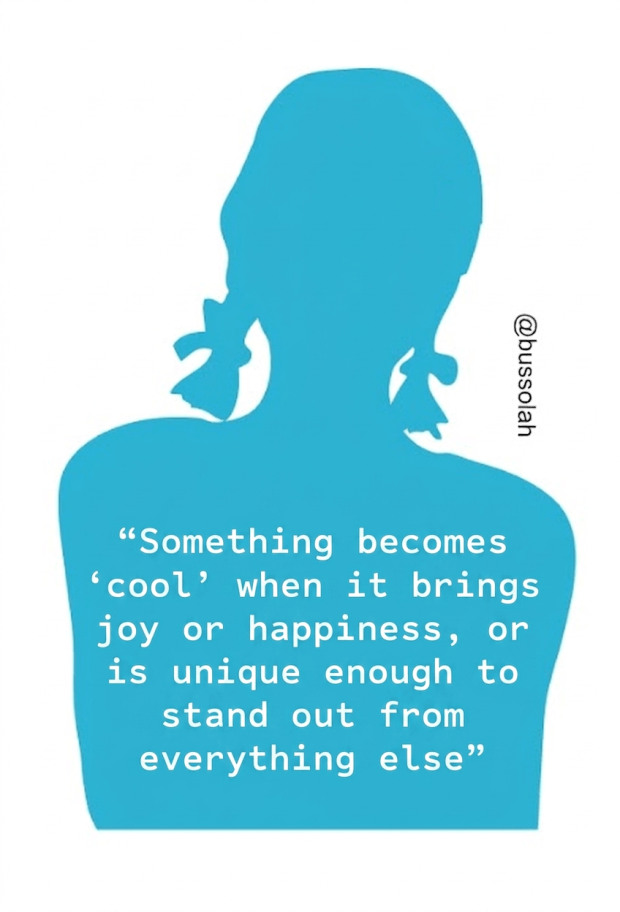
It’s Lit: A Guide to What Teens Think Is Cool, a study conducted by Google and published in 2016, offers a kind of framework for understanding “what teenagers consider cool.” “Teens feel that something is cool if it is unique, impressive, interesting, awesome, or amazing” […] “Something becomes ‘cool’ when it brings joy or happiness, or is unique enough to stand out from everything else” (It’s Lit, 2016).
They believe that brands can change the world, and this idea is reflected in how they perceive and evaluate them. It’s Lit presents a top 10 ranking, in which YouTube, Netflix, and Google take the top three spots, earning the title of the coolest brands.
“I like well-known brands – mainly because they offer better customer service – but I also like brands that aren’t very popular yet. They feel more unique.” GRIFFIN, 15 (Think With Google, 2016).
In June 2019, Business Insider published a study conducted with a group of 1,884 Americans aged between 13 and 21, revealing insights into the use of digital platforms. When asked which platforms they were no longer using, 30% of respondents answered Facebook. In the same week, another report showed that 65% of Gen Z check Instagram daily, followed by YouTube (62%) and Snapchat (51%). These figures are consistent with another study conducted by Defy Media for Adweek (2017). When young people were asked, “Which platform could you not live without?”, YouTube ranked first, with a higher representation among boys in the choice of platform.
Gen Z: TikTok
TikTok is a Chinese app for creating and sharing short, spontaneous, and authentic 15-second videos, often featuring music, sounds, lip-syncing, and voiceovers. In 2016, ByteDance launched Douyin in China, where it still operates under that name. It was later introduced to the international market as TikTok, which soon after acquired Musical.ly (Wikipedia, 2019).
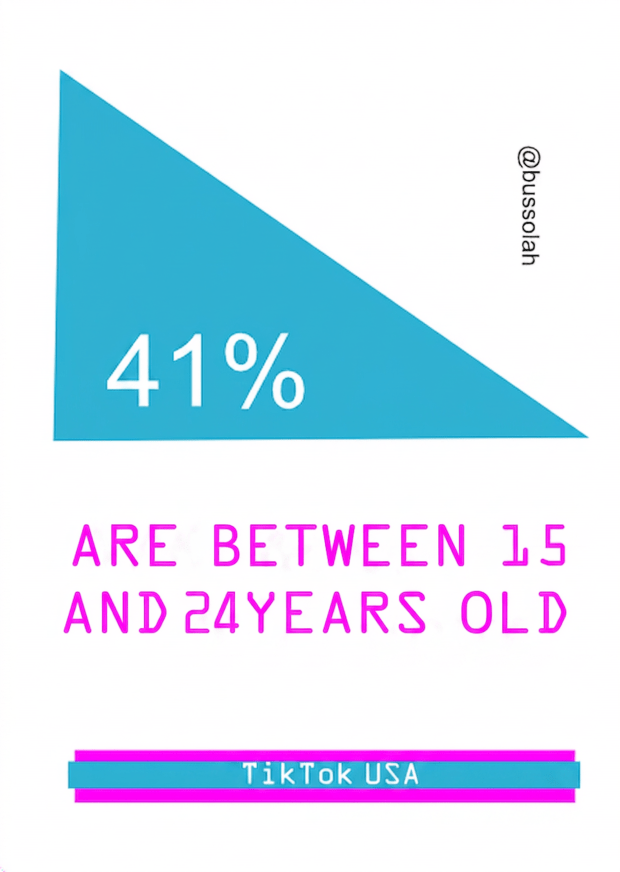
Globally, TikTok has been downloaded 2 billion times on the Apple Store and Google Play. In the first quarter of this year alone, the app reached 315 million installations (Sensor Tower, 2020). These are promising signs for Rodrigo Barbosa, TikTok’s community manager in Brazil, who aims to “create a fun, positive, and inclusive community” (interview with UOL, 2020). Around 66% of TikTok users around the world are under the age of 30 (Appa Lab, 2018). In the United States, 41% are between 15 and 24 years old (Themds, 2019). Referred to by some news sources as “Social Music,” it is the first platform to be driven by Generation Z (Themds, 2019).
Users can add customized edits directly within the app, without needing to rely on multiple external video editing tools. It is becoming increasingly common to find users teaching something or showcasing their skills. At the University of Cincinnati (2019), in the United States, a study titled “Learning and Sharing Creative Skills with Short Videos: A Case Study of User Behavior on TikTok and Bilibili” sought to understand users’ creative practices on short-form video-sharing platforms. The findings highlight the potential for new learning models based on short videos within social media platforms.
Gen Z: Consumer
In England, from the 16th to the 19th century, we can observe the origins and “birth” of consumer society. The transformation that began in the last 25 years of the 16th century expanded throughout the 17th and 18th centuries, and by the 19th century had become a permanent social factor. The surge in spending during that period can be attributed to the use of expenditure as an instrument of power by Elizabeth I, as well as to social competition among the Elizabethan nobility in pursuit of higher status. These changes led to the rise of fashion, which—among other factors—contributed to the decline of “patina”—where those who not only achieved but maintained their status across generations were distinguished from lower classes based on their material possessions. This system proved inefficient over time due to imitative behavior among lower-status consumers.
This “trickle-down” effect, pioneered in theory by George Simmel, intensified with the advent of fashion. Upper classes increasingly adopted innovations across all product categories in search of differentiation and status preservation. What was once purchased out of whim by the nobility became something bought out of necessity, and eventually, something driven by fashion – “being fashionable.” What used to be bought once in a lifetime could now be purchased repeatedly. With fashion, individuals of higher status could find more prestige in new objects than in old ones. The nobility began consuming according to new social purposes, values, tastes, and preferences. Both upper and lower classes developed increasingly diverse consumption desires. The structure of social values and the construction of individual identity were impacted by these changes. “Marketing professionals” incorporated the dynamics of fashion and worked to regulate its intensity. New techniques were developed to create new styles, aiming to meet the demands of consumer society. As new styles emerged, older ones quickly fell into discredit. This marked the birth of the fashion system that continues to shape consumption patterns to this day. These insights are drawn from the book Culture and Consumption, by McCracken.
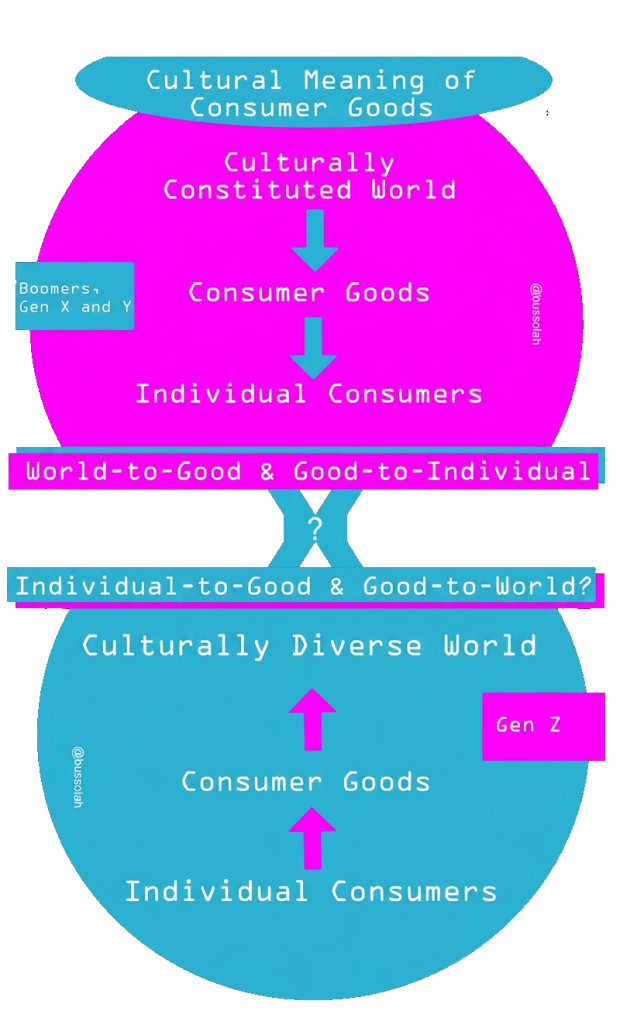
This book helps us understand how we became a consumer society, how we can think about products and services in order to better understand their symbolic properties, the different ways we use the meaning potential of goods, and how consumption allows for the construction of a system of classification of things – and people – in social life. McCracken argues that consumer goods can carry cultural meaning, that this meaning is constantly in motion, and that there is a traditional trajectory in how it moves. Typically, meaning is transferred from the culturally constituted world to consumer goods, and then to individual consumers – a “world-to-goods and goods-to-individual” relationship.
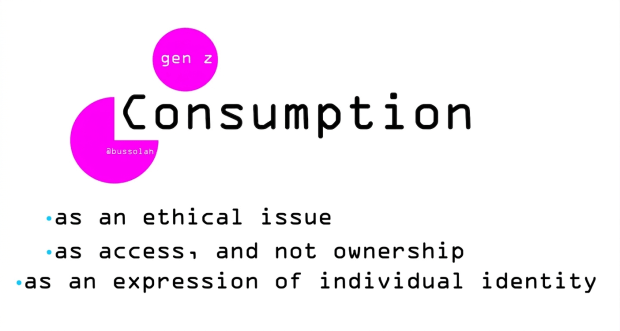
The historical context in which a generation emerges can influence how it engages with consumption. The consumption behavior of Baby Boomers, in the post–World War II period, is best represented by ideological expression. Generation X is marked by the pursuit of status, while Generation Y is driven by the search for experiences. For Generation Z, the main driver of consumption is the search for truth, both personal and collective (McKinsey, 2018). Consumption becomes a manifestation of individual identity and a means of self-expression. This is a generation that moves away from the traditional logic of consuming to fit into group norms. They seek to understand the origin of products, how they are made, and how these aspects reflect their worldview and individuality.
For Generation Z, there must be alignment between what marketing campaigns communicate and what is actually practiced. Young people seek to purchase products from companies they consider ethical (70%), refuse to buy goods from companies involved in scandals (80%), try to learn the origin of everything they purchase – where it is made, what it is made of, and how it is produced (65%) – and consider recommendations from friends as the most reliable source for learning about products and brands (63%) (McCrindle, 2019). In this sense, they establish a more pragmatic and analytical relationship with institutions and introduce a new meaning for consumption.
For previous generations, television and radio were, for many years, the main sources of news. For Generation Z, these sources have multiplied with the emergence of the internet, making generational shifts more significant and accelerating technological trends. Technology has provided a high level of connectivity among individuals and with the world, creating a “hyper-cognitive generation that is very comfortable collecting and cross-referencing many sources of information, and integrating virtual and offline experiences” (McKinsey, 2019).
Analyzing McCracken’s ideas on the cultural meaning of goods, and considering Generation Z’s expectations for the future, it is possible to observe a new movement toward a different logic of consumption.
With consumption directly linked to the expression of individuality, personalization and gender issues gain prominence. 58% of upper-class consumers and 43% of middle-class consumers are willing to pay more for personalized offerings. Additionally, 48% of Gen Z respondents said they value brands that do not classify products as masculine or feminine (McKinsey, 2019).
REFERENCES
KOTLER, P. – Marketing 3.0. Rio de Janeiro: Elsevier, 2010.
MCCRACKEN, G. – Cultura e Consumo. Mauad, 1ª edição, 2010.
Links – BORTOLAZZO – EXAME – MCKINSEY – JWT: GENERATION Z BRAZIL – MEIO E MENSAGEM – MCCAN – CONSUMOTECA LAB – FORBES – GOOGLE APIS – ADWEEK – UOL – GLOBAL WEB INDEX – APPA LAB – THEMDS – RESEARCH GATE – MCKINSEY – FORBES – MCCRINDLE.
Author: Thiago Silva dos Reis

…

